Friday, November 25, 2011

Day 7 - Internet problems!

Hello everyone!

Lots of problems connecting today, so I am taking advantage of this short window of "working" to post quickly.

Better today, so CHECK BELOW!

Just as a quick side-note, it has been raining non-stop for the last 2 1/2 days. Can my students think about the geography of where WE live and speculate as to what would happen if WE had rain for 2 1/2 days straight? I will talk about why that's not so bad here in Costa Rica later!

One picture for you all:


EARTH University, where we are staying for three days!

Also, as it is working for 5 minutes again, I will be OUT of internet contact for the next two days as we go in groups to stay with a Costa Rican family on a sustainable farm!

Look forward to many updates coming soon, though!

Day 6

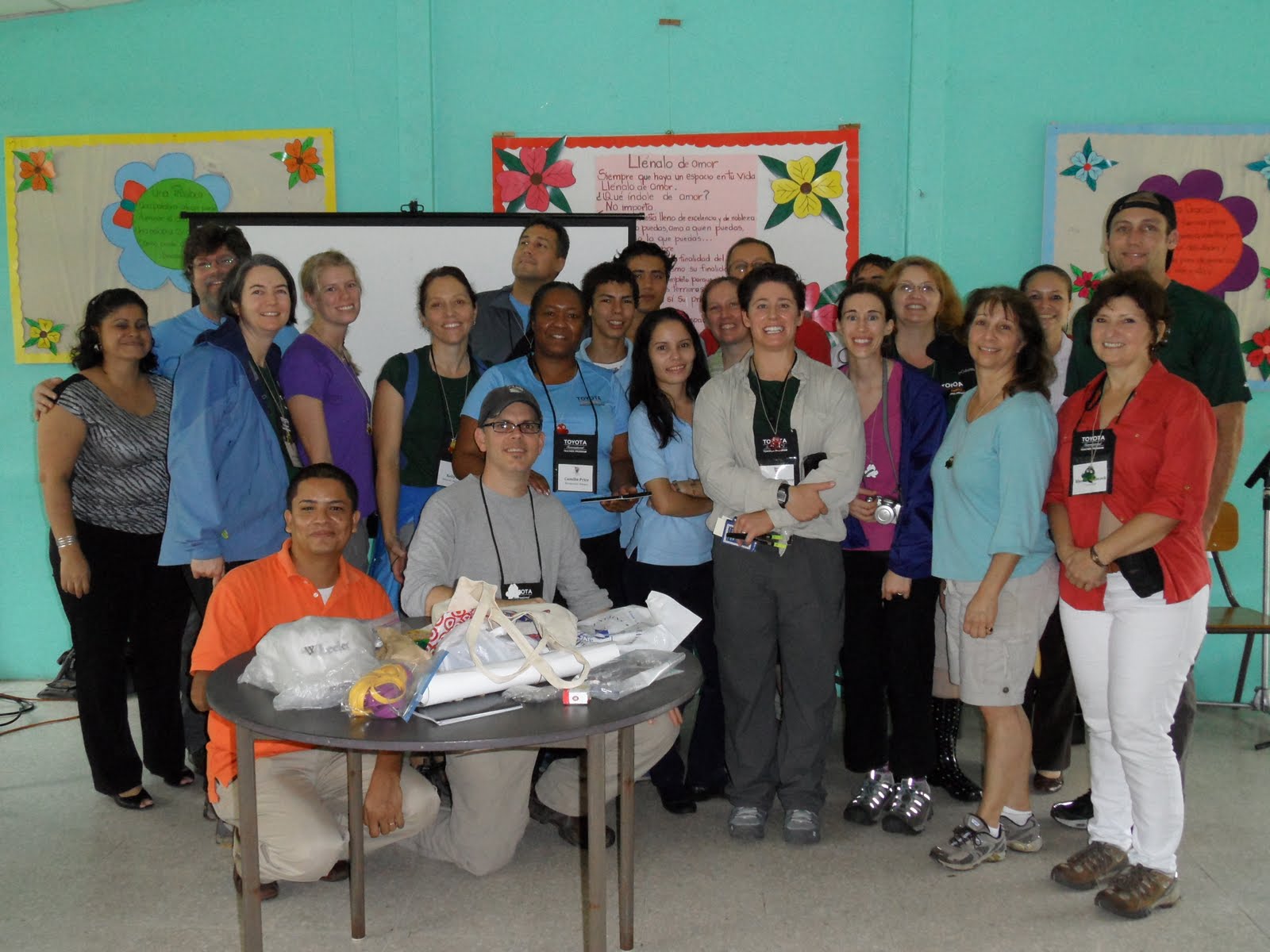
Today we were able to spend about 3 hours at a local high school, which could not have been more different (economically) that the school we visited two days ago...


Liceo de Pacora is a provincial high school, which had about 500 students ranging from grades 7-11. We visited the school at the end of their year, with just a few weeks left until their big "summer" break! The students were finishing exams, and we got the feeling they were very much looking forward to summer just like our student would.

Summer for Costa Rican students takes place in the months of December and January. The reason they have the big break at this time is because the rain in Costa Rica finally lets up for these two months. It is the dry season!


The students performed for us today, giving us a glimpse into their lives, and the lives of those at this school. Liceo de Pacora is in a very rural part of Costa Rica, and these students seemed to very much appreciate the limited resources they were given while attending school. For some, school is the only safe place they might have. The most inspiring thing was that even though the students lived for the most part below the poverty level here, their attitudes were incredible and we felt honored to be able to participate in their school, even if only for a day!

We spent the afternoon today talking with the experts at EARTH University about recycling and waste management. We saw an eye opening movie about Guatemala City and it’s urban dump called “Recycled Life”. It’s tough to watch, but is truly an amazing look into the lives of people in Guatemala that we might never otherwise see. I recommend renting this if you have time – even my students!

Composting Pile...

We traveled all over the EARTH University campus seeing how they deal with the overwhelming task of staying as close to the sustainability line as possible. We saw great examples of recycling, composting, and proper land use management. Amazing things they are doing here! This university grants students from all over the world (mostly 3rd world countries with aggro economies) a place to study, with full scholarships to over 50% of the students. The rest receive some aid, but almost all return their home countries to better the agricultural business practices there!

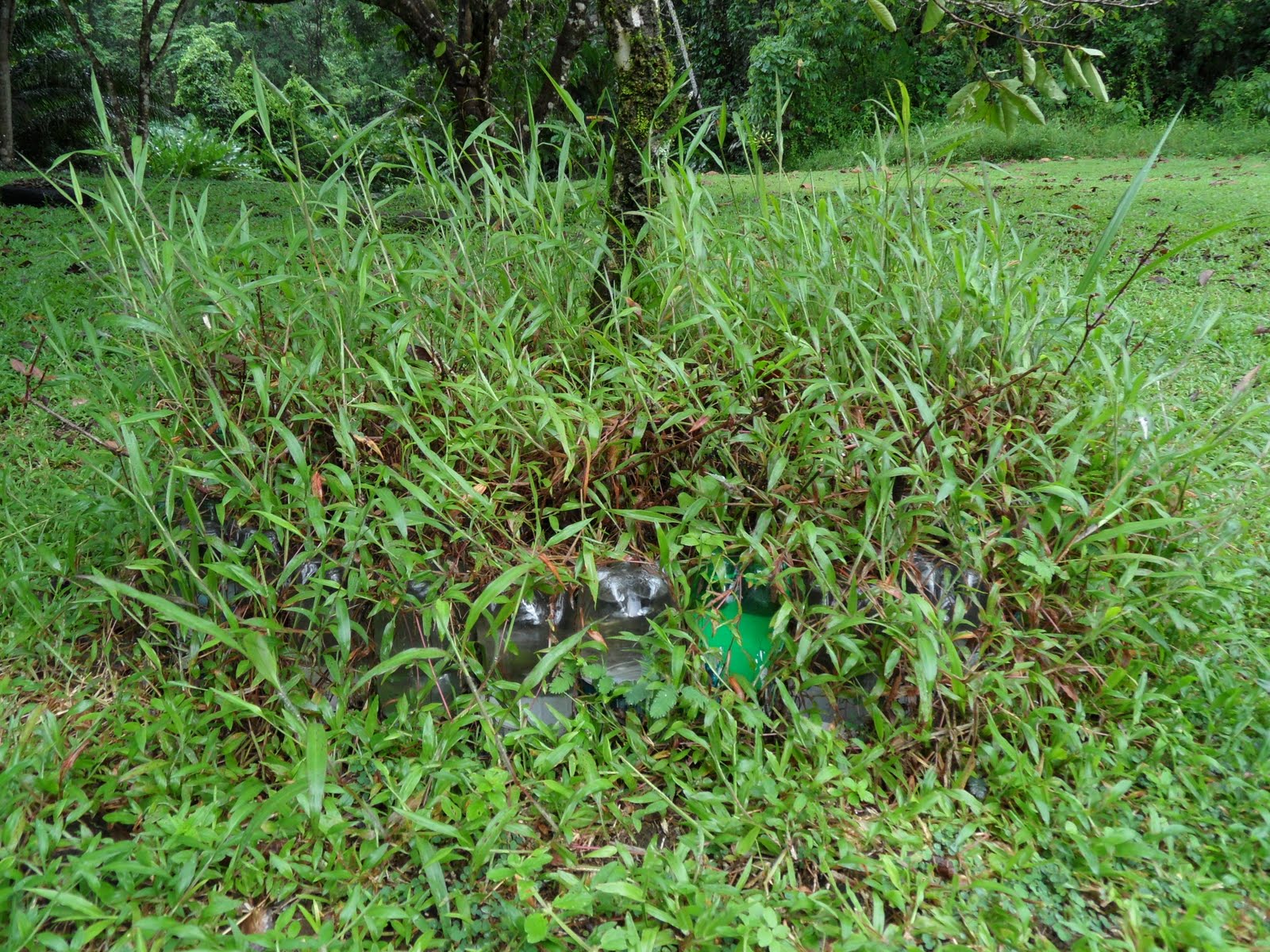
I think the picture below is a great example of "Re-use".

While we were touring the grounds, I saw TONS of new animals and plants, a few of which my students will love to see, AND even more that I can share with you in the pictures below:

Another 3-toed Sloth! Look at its head craning around to look at us!


More coming soon!


Thursday, November 24, 2011

Day 6 - Thanksgiving!

This trip has been wonderful, so far, but sometimes...I just miss my family!


Happy Thanksgiving to all back in the States!

Wednesday, November 23, 2011

Day 5

Day 5

This morning started early again!!

At 5:30 our bags were collected and put on the bus, and we were off to visit our first school. Blue Valley school is located in a suburb of San Jose, and it was our last day here until the end of our adventure on December 3rd. That day seems so far off, but at the same time I cannot believe I have been away for 5 days!


Blue Valley school has about 600 students, ranging from kindergarten to 12th grade. Remember that in Costa Rica primary school is K-6, and high school is 7-11. The extra year in high school is required if a student wants to pursue the International Baccalaureate diploma, like students can do at Granite Hills high school next to us! If my students are thinking that Blue Valley must be an IB school - you would be correct! I saw a lot of project based-learning, just like we have at home.


One thing we saw that really impressed me was the younger students putting on a brief performance for their classmates on why we celebrate Thanksgiving in the States. Although they do not celebrate the holiday in Costa Rica, I thought it was wonderful that they were taking the time to explore traditions and customs of other countries and cultures! I think we are on the right path to do the same at Montgomery.


We were also able to hear some of the older high school students present information on the various clubs and electives they have that focus on environmental awareness. In a country that is so rich in biodiversity, it was encouraging to see the future leaders of the country focused on preserving their rich national heritage and ecology.

We then boarded the bus and were off to EARTH university, where we will spend the next 3 days. On the way, however, we stopped at one of the most amazing archeological ruins I have had a chance to visit!

Oh, by the way - it RAINS in the RAIN FOREST. A LOT!


Raining in the rainforest!


Guyabo National Monument is a pre-Columbian ruin of a very holy site, with many different structure remains and a working underground aqueduct system that is over 2,000 years old!! This was a very holy site for the early indigenous people of Costa Rica, and is now considered a World Heritage Site.


Foundations of the ancient structures


My students especially will appreciate these next few sentences, because as well as being an outstanding historical site, Guyabo is in the middle of the rain forest. WOW! You just have no idea what immense biodiversity there is here until you walk amongst it. The sheer amount of plants and animals we saw on a short 1 1/2 walk was amazing. Guess what, my dear students? I can cross off TWO things from our scavenger hunt lists already!!

We saw a three-toed sloth lounging in the treetops, curled up against the rain, I took a picture, which is below, but my camera would not zoom enough to get a clear picture. Look very closely in the V of the far tree - you will see a bundle of fur crouched in the branches!


This next sighting will excite my students no doubt - a hog-nosed viper! It's in the same family as the golden eyelash viper in our lists, and is extremely deadly! Stayed well clear, and was still able to get a great picture for you all.


More information coming tomorrow for everyone.

Ok students, here is something to think about for today: we visited an ancient site today where only the remains of the civilization are evident. Not much is left, after all these years. Pretend for a moment that a new site was discovered completely intact - with all the artifacts and treasures contained in the tombs or structures. What to you think is the correct way to treat those relics? Do they belong in a museum, protected from decay and theft, or should they be left alone in their original place, to respect the wishes of the original builders?

Lots to think and write about. More coming tomorrow!

Happy Thanksgiving to everyone who is following along!

Pictures coming tomorrow!!!

- Posted using BlogPress from my iPad

Tuesday, November 22, 2011

Carbon Neutrality

Our meeting this morning was on Costa Rica's plan to become the first carbon neutral nation by the year 2021, the 200th anniversary of their independence from Spain.

What is carbon neutrality?

DECC published a definition of carbon neutrality in October 2009:

‘Carbon neutral means that – through a transparent process of calculating emissions, reducing those emissions and offsetting residual emissions – net carbon emissions equal zero’.

In brief, Costa Rica has set a goal to counter their production of harmful emissions with actions that will result in a zero balance. So rain forest preservation or replanting would offset the burning of fossil fuels (in a known amount).

I invite my students to research the concept on their own! This is an upcoming discussion topic when I return!

Day 4 - San Jose, Costa Rica

Hello everyone! Buenos Dias!

We arrived yesterday afternoon in San Jose, Costa Rica after a 3 1/2 hour flight or so from Houston, Texas (a short hop from San Antonio previous to that). No issues at all. Everyone got through customs and immigration with little hassle. What a pleasant start!

We drove from the airport to our hotel (a Holiday Inn, of all things), and were checked into our rooms - again, no hassles. The people here in Costa Rica, and our Toyota hosts, are so gracious and accommodating to our every need. We feel like royalty!


As you can see from the above photo, there are some OTHER Central American Countries that are not too far off from Costa Rica. For my students - Panama is about 350 KM from Costa Rica. Go ahead and do a bit of research (or recall the conversion factor that we used a few times) and find out how many MILES Panama is from Costa Rica...

After settling in our room, we were treated to a 3 hour walking tour of downtown San Jose, the capital city of Costa Rica. It is a sprawling city of about 2 million people. Considering that the entire country of Costa Rica has about 4.5 million, that means almost half of the residents live here in San Jose, or in it's outlying communities!

There is so much history here it is difficult to get all down, but suffice it to say that this city has been crucial in the development of Costa Rica as a democracy (for my students - with elected officials like we have in the United States), and that the country has had a relatively peaceful existence since the time of it's independence from Spain in 1821. Currently, Costa Rica does not even have an active military - only volunteer militia! Amazing!

Some pictures of our day:


Some Costa Rican art to look at until we leave for the rain forest tomorrow. Can my students identify any of the species in the paintings?


Guess what this tree is? A Cork tree - yes, just what you are thinking!! It felt just like a cork to a bottle (the bark).


Just a few more plants. Any guesses as to this one? When this plant is ready to be harvested, the beans (seed pods) will be red. Coffee!!


This plant is known in English as "Yesterday, Today and Tomorrow", because the flowers bloom in threes and at different times. The color of the flower indicates how long it has been blooming, from lavender (new flower) to a white color (older flower).


Here is a picture of a school (and bus) for my students. At this building, they have students ranging from age 6-13, but they go to school on different schedules. On alternating days, the younger students (k-3) go in the morning, then have the afternoon off. On those same days, the older students (4-7) go to school in the afternoon. They switch the schedules on every other day! This is a public school located in the heart of San Jose.

Monday, November 21, 2011

Toyota Tour

We spend all afternoon yesterday at the Toyota production plant in San Antonio, Texas. Why a great experience. Our hosts here have been very generous in every way.

The highlight of that afternoon was getting an inside look into the manufacturing processes and ideas that have made Toyota such a successful company. I invite everyone to look up the word "kaizen".

We were also able I get a glimpse at all the charitable and community endeavors that Toyota is responsible for here in San Antonio, and across the world.

The ONLY downside to yesterday was that the actual manufacturing plant production line was closed - it was Sunday! Someday I would love to see all the ideas and concepts we heard about in action!

Pictures coming soon!


- Posted using BlogPress from my iPhone

Location:Losoya St,San Antonio,United States